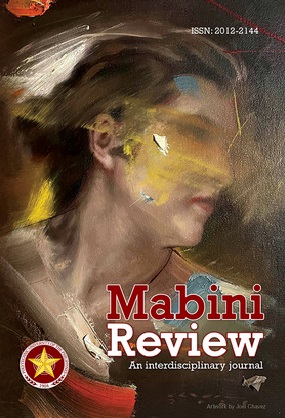
Volume 8, Number 1 (2026)
On Philippine Studies, Ethnic Stereotypes, Capital, and Constructive Civic Emotions (Dr. Joseph Reylan Viray)
Philippine Studies was the dominant theme chosen for this issue. Articles written in Filipino language were featured to highlight the Journal’s additional role—that is to be a venue for Philippine studies scholarship— while remaining true to its original interdisciplinary character. This is consistent with the University’s intention to establish a Center for Philippine Studies within the Institute for Culture and Language Studies. Academics from different universities contributed think pieces that explored, analyzed, and investigated Philippine reality through the lenses offered by linguistics, cultural studies, ethics, history, and philosophy. The Philippines is a country with several languages, some of which are barely surviving. For instance, the Kapampangan language in Luzon Island is not extinct, but it is slowly being eroded by external and endogenous elements. Tagalog and English languages are gradually blending with the Kapampangan syntax. Kapampangan speakers are steadily decreasing in number. This reality is conveyed in Jennifer Espada’s article on Fray Diego Bergaño’s Arte dela Lengua Pampanga. Espada concludes, among others, that most of the original Kapampangan culinary terminologies in Bergaño’s dictionary are no longer used in ordinary conversations, and Tagalog equivalents are used instead. She believes that using, cultivating, exploring, and further developing one’s language should be a lifelong endeavor since it reflects one’s identity, heritage, and history. Jezryl Xavier Genecera and Jay Israel De Leon, like Espada, emphasize the importance of Filipino cultural history. They investigate the history and status of the Las Piñas Bamboo Organ. Genecera and De Leon share the following information based on their interviews with informants and tedious library work: Padre Diego Cera’s life story, the sound quality of the bamboo organ, restoration efforts, the vision of the Bamboo Organ Foundation, the challenges faced by the Bamboo Organ, the purpose of the International Bamboo Organ Festival, and the importance of training the next generation of organists. The essay also explains how the Bamboo Organ affects the economic, social, and environmental aspects of the community. Jeanette Mendoza, Mary Irene Clare Delena, and Feorillo Demeterio compare the ethnic stereotypes of Kapampangan, Ilocano, and Tagalog students at a State University in Central Luzon. Using a modified Katz and Braly trait checklist, the team discovered that Ilocano and Tagalog students share the most features. The ethnic stereotypes of the Kapampangan and Ilocano share the fewest qualities. Similarly, the Tagalog ethnic stereotype is the most favorable, while the Kapampangan ethnic stereotype is the most negative, according to the study. The importance of Malay Journal of the De La Salle UniversityManila as a forum for Philippine studies discourse cannot be overstated. May Mojica, Leslie Anne Liwanag, and Feorillo Demeterio dissected half (50%) of the journal’s articles between 2011 to 2015 to see which of the following general discursive categories dominated the journal: Philippine studies as a neutral discourse, Philippine studies as a colonial discourse, and Philippine studies as a postcolonial discourse. The paper concludes, among others, that there are more postcolonial than neutral and colonial essays published in the journal. This trend is not exclusive to Philippine academia, as the global academic environment underwent a postcolonial turn in the last decades. Aside from papers about Philippine studies, local history, and ethnic stereotypes, this issue also includes philosophical and speculative intellectual article. Gary Musa claims in his essay that capital is sustained through the invasion of global spaces . Musa believes that accumulation for the sake of accumulation leads to inequity in the ownership of rural and urban spaces. Musa proposes a retaking, reterritorializing, and reoccupying of areas with the goal of emancipation. Anticipating the worsening global health problem, Gerlie Ogatis, influenced by Martha Nussbaum’s theories, emphasizes compassion and other good emotions as possible strategies for human survival in the face of the Covid-19 epidemic. She encourages Filipinos to overcome negative emotions like fear, contempt, and shame, which are counterproductive to the development of positive civic emotions that are necessary for survival. I hope that readers will find inspiration for their own intellectual journey and scholarship from the diverse pieces offered in this issue. Lastly, I also would like to extend my personal gratitude to the managing and associate editors, reviewers, layout artists, proofreaders, and authors whose efforts have resulted in this collection that truly fosters genuine intellectual pursuits. Enjoy reading.Articles
Ang mga Diskurso ng Araling Pilipino na Umiiral sa mga Artikulo ng Malay Journal (The Discourses of Philippine Studies in the Articles of Malay Journal)
Leslie Anne Liwanag, May Mojica, and F.P.A. Demeterio III
Comparative Study on the Ethnic Stereotypes of the Kapampangan, Ilocano, and Tagalog Students of Tarlac State University
Jeanette Mendoza, Mary Irene Clare Deleña, and F.P.A. Demeterio III