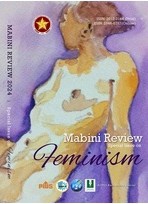
Volume 14, Number 1 (2024) Feminism Special Issue
Feminism and its Aspirational Goal for Gender Equality (Gerlie Caspe-Ogatis)
Academic communities in different parts of the country are actively responding to sustainable development goals as part of the global call to ensure that people everywhere can enjoy peace and prosperity and will be given spaces to preserve their integrity and be accorded respect. Among the list, the fifth category is gender equality which can be seen as an aspirational goal for any nation that aims to cultivate just and safe spaces for all. It can be observed that there is a conscious effort in different areas of society in making this goal attainable. For instance, gender development centers and organizations actively promote gender equality through academic conferences/seminars and public lectures as a hopeful step in advancing the formation of inclusive civic spaces. Sustaining egalitarian institutions requires an openness to the vulnerability of every human being. It demands fidelity to the vitality of life. It is in this regard that Mabini Review Journal, one of the most active institutional journals of the Polytechnic University of the Philippines in offering timely publication and serious scholarship in the areas of philosophy, humanities, and allied disciplines, is supportive of the sustainable development goals of Sintang Paaralan especially in the promotion of gender equality. This most recent compendium is proof of that as it presents a variety of topics in feminism, mostly focusing on the struggles of women in many areas of human survival. It also includes rich analysis picturing women’s predicament in literary pieces and their realistic counterparts. Gender equality is an aspirational goal for every nation aiming to establish just institutions within its jurisdiction, dictated by the rational view that we must put an end to human suffering and discriminatory practices, and provide an equal and safe ground for everyone to potentially flourish. One can observe the collective efforts made by different sectors in our society to promote safe spaces and inclusivity. Our active engagement in the cultivation process through promising outputs in research and publications is a strong testament that we are not easily giving up on our striving. For instance, students are now becoming more and more engaged in developing their theses focusing on gender studies, a promising result that we owe a lot from educators who are sincere in their attempts to put an end to the destructive nature of gender-based discriminatory practices in the educational setting. An inspiring organization of women philosophers in our land, Women Doing Philosophy, is also seriously contributing to the realization of this task through active speaking engagements showcasing the talents and fine scholarship of Filipina philosophers of today. Public and private organizations are likewise showing commitments in their orientation programs for their employees and direct communities in relation to gender sensitivity concerns. In addition to our active striving are the efforts made by some government agencies in implementing policies supportive of providing safe spaces for women at the same time i.e. anti-VAWC, women’s desks, reprimanding men who are shaming women by catcalling, and public transportation providing spaces for women passengers alone. These are just a few of the active efforts in our civic spaces, a hopeful attempt in potentially realizing our goal for gender equality. However, one should be reminded that it requires a collective effort to break away from the hardwired social construct of patriarchal thinking – men and women must extend conscious efforts in fighting out inequality so that we can actively promote the cultivation of egalitarian culture. This publication documents the status of gender inequality as reflected in the philosophical and literary works of the contributing authors. To them we owe our sincerest gratitude as they share with us their valuable ideas in this very first special issue on feminism by the Mabini Review Journal. A genuine and unhierarchical human encounter with my colleagues becomes an inspiration as well, to make this project possible. They were instrumental in bringing this compendium to life as they extended me the privilege of spending serious editing our featured articles beyond their office hours. Indeed, this kind of equality and mutual respect in the workplace creates an inspirational environment for everyone to thrive better. This special issue is also motivated by the support that university journals get from the Office of the Vice President for Research, Extension and Development through the Research Publications Office, a promising realization of the Polytechnic University of the Philippines’ goal to provide inclusive and safe spaces for everyone.Articles
Topic Development in Talks Among Women
Srisna Lahay
Beyond Labels: Uncovering the Complexities of Nanay-Students’ Identity and Experiences in a National High School
Mark – Jhon Prestoza and Kathleen Joy Esteban
Empowered Mother, Healthy Child: The Role of Women Economic Empowerment in the Achievement of Better Child Health Outcomes in the Philippines
Cheenie Rose Bermas and Melcah Pascua Monsura
Novels of the 20 th Century Analyzed Basedon Marilyn Frye’s Oppression
Mary Sarah Angoluan
Hetairas: The Pre-Feminist Empowered Women of the Western Antiquity
Ronel De Loyola and Werllie Bueno
Investigating Linguistic Sexismin Popular Ilokano Songs
Salirick Andres
What Could the World Have Been Without Women?
Fr. Jaime Del Rosario