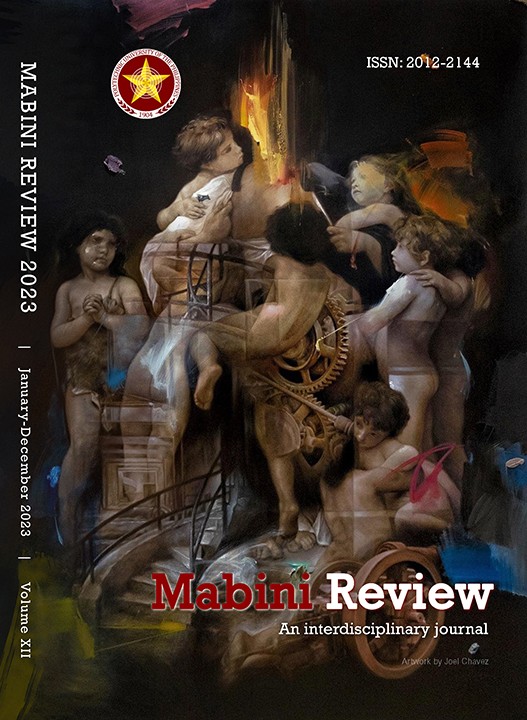
Volume 12, Number 1 (2026)
Revisiting Seminal Figures in Philosophy, History, Language, and Culture (Dr. Joseph Reylan Viray and Assoc. Prof. Gerlie Caspe-Ogatis)
We are pleased to introduce scholarly articles whose intellectual contributions to various domains within philosophy, the humanities, and social sciences are of considerable significance. The compendium encompasses a range of disciplines: it features articles in the field of philosophy, history, historiography, theology, political studies, and studies examining issues related to culture and language. Gregorio E.H. Del Pilar’s work synthesizes the findings from sixteen comparative studies that scrutinize the efficacy of using English versus various Philippine languages (Filipino, Tagalog, Hiligaynon) as the medium of instruction. A majority of these studies, eleven to be precise, unambiguously favor Philippine languages as more effective instructional mediums. One study manifests a partial preference for Philippine languages. Upon evaluation of the academic subjects, grade levels, and ethnolinguistic groups considered in these studies, Del Pilar concludes that Philippine languages significantly outperform English as the medium of instruction in the disciplines of Science, Mathematics, and Social Studies across all educational tiers, from Grade 1 to college level, for most of the ethnolinguistic communities in the Philippines. Our journal also presents an essay of Nicanor G. Tiongson, a speech that he delivered at Carlos Palanca Memorial Awards for Literature in Makati City last November 30, 2022. His essay is a reminder that our intellectual culture at present is challenged by the proliferation of activities in social media that go against the formation of critical spirit. The narrative presented in his essay, “Ang Artista sa Panahon ng Tiktok, Vlog, at Madlang Kabulaanan” is a warning that our society is in fact slowly embracing passivity and blind adherence to false information. Raniel S. M. Reyes examines Nietzschean constructs through the lens of Gilles Deleuze, particularly focusing on three key concepts: the “Genealogy,” the “Will to Power,” and the “Eternal Return.” Reyes asserts that Deleuze derived important philosophical principles from Nietzsche, namely genealogy as a mechanism for critique, interpretation, and creation. Additionally, he contends that Nietzsche’s notions of the will to power and the eternal return serve to facilitate a nomadic, self-reflexive search for new ways of living and thinking. However, Reyes posits that a comprehensive understanding of the intellectual interplay between Nietzsche and Deleuze requires an inclusion of Friedrich Wilhelm Hegel’s contributions to the discourse. In this context, Mary Sarah L. Angoluan’s article on Hegel serves as a complement, albeit with divergent theoretical underpinning. Angoluan’s work interrogates the traditional critique of Hegel’s anthropocentrism, which prioritizes human cognition over nature, and offers a contrasting interpretation. She argues that Hegel’s philosophy holds potential significance for environmental ethics. By deeply understanding the intrinsic properties of the natural environment, Angoluan claims that Hegel’s work can substantively contribute to environmental conservation efforts. Correspondingly, Kristoffer A. Bolaños employs Martha Nussbaum’s theories on narrative understanding as an epistemological tool for fostering compassion. Despite the strong force of negative emotion in the civic sphere, the only antidote seen by Nussbaum in going against the corrosive forces of political use of fear, shaming and disgust is the appropriate formation of compassionate spirit in our society. And one potential way to cultivate a compassionate spirit is through proper education of emotion (Nussbaum, 2013), embedded as well in literature of many nations that stir spirit of camaraderie and concern for the plight of others. This approach echoes the transformative potential attributed to Hegel’s philosophy in recent interpretations, which advocate for a refined understanding of the natural environment as an ethical imperative. Taken in concert, these explorations of overlapping philosophical themes can be synthesized into an integrated framework, one that could serve as a strong theoretical foundation for addressing both social equity and environmental sustainability in a synergistic manner. In the article by Mark Joseph P. Santos, the intellectual framework of Zeus Salazar’s Pantayong Pananaw—prominent for its emphasis on the utilization of the national language in discourses concerning the indigenization movements within the field of Philippine social sciences (Guillermo, 2003)—serves as a foundational methodology. Santos explains the necessity for the indigenization, or localization, of Filipino Theology and champions the Pantayong Pananaw approach. He articulates a seven-point strategy for the advancement of “Pilipinisasyon ng Teolohiyang Pilipino” or the indigenization of Filipino theology. These recommendations range from the establishment of a specialized journal and a national association devoted to the indigenization of theology, to the compilation of a critical bibliography of theological works in the Philippines. The strategy further suggests collaborative efforts in translating important theological works into Filipino and encourages the enlistment of cross-disciplinary experts from other indigenization movements such as Pantayong Pananaw and Sikolohiyang Pilipino. Jeremiah Montejo, a scholar in the field of history, offers an analytical portrayal of the life and political career of former President Ramon del Fierro Magsaysay Sr. The article depicts Magsaysay as a figure of substantial influence, characterized by his humble leadership style. His political journey, starting with a congressional seat in Zambales, later evolved into critical diplomatic roles on behalf of the Philippines in the United States and counterinsurgency operations against the Hukbalahap rebels. However, Montejo also provides a critique of Magsaysay’s governance, especially concerning his perceived subservience to American interests. This multi-dimensional analysis enhances our understanding of both historical trajectories and contemporary governance challenges within the Philippines. Arvin John C. Ramirez painstakingly elaborates a critical review on the state of Philippine Politics in relation to relevant events during the 2022 election campaign. He analyzed the dynamics of Filipino culture and its effect in the formation of the voting pattern of the populace. It is shown in the study that Filipino practices and traditional beliefs are proven to be influential factors in the shaping of political tradition. The author also rendered a careful exposition of the negative practices in the country’s political system and its detriment in determining the political participation among the citizens of our land. Cristy Allen L. Serote brings into light the power of historical art to picture relevant events in the past like in the famous mural, “Filipino Struggles Through History.” The Filipino Struggles Through History by renowned artist Carlos “Botong” Francisco. This mural is composed of four panels, and the researcher makes an analysis on the left panel focusing on the experience and situation of the country from the pre-colonial period to the central part of the 19th-century Spanish conquest. The analysis is aided by Barthes’ semiology and Hans Slomp’s political ideology with an introduction as well of the modified version formulated by F.P.A Demetrio in examining the given political ideology in the painting. This study believes that the artist will effectively influence the manner of appreciation of its spectators if political ideology behind the painting will be unearthed. This in turn will allow the formation of deep understanding of our history and will exhibit a sense of pride for our identity as Filipinos. Lastly, Marvin M. Lobos features the value of preliminary perspective on the practice of translation studies of the selected poems from the Caribbean and Latin America, nations who, like ours, experienced colonialism and continues to struggle and heal from the scars left even at present. The study covers in its content the literary and translation relation of the Philippines to the said regions. It also discusses the challenging nature of poetry translation, review of different approaches and considerations in the significantly challenging kind of literary translation. This study is essential in understanding the dynamics behind many translation studies, particularly in the practice of actual process documentation detrimental to which is the exposition of the real struggles of people we are covering, because it is a sensitive duty to honor their life as people. To our dear readers, we humbly present to you the fine scholarship that you can find in the pages of our most recent issue, the PUP Mabini Review Journal 2023!Articles
Ang Artista Sa Panahon Ng Tiktok, Vlog,at Madlang Kabulaanan (The Artist in the Age of TikTok, Vlogging, and Mass Deception)
Dr. Nicanor Tiongson
Deleuze’s Nietzsche: Life, Critique, and Difference
Dr. Raniel Reyes
A Hegelian Approach to Environmental Philosophy
Mary Sarah Angoluan,
Nussbaum: The Importance of Storytelling and Engendering Compassion for Today’s Political Life
Kristoffer Bolaños,
Pantayong Pananaw Bilang Dulog sa Teolohiyang Pilipino (From-Us-for-Us Perspective as an Approach to Filipino Theology)
Mark Joseph Santos